
ESG ABCs at JCIC: How We Incorporate ESG Into Our Investment Process
Cameron Scrivens explains how JCIC evaluates environmental, social and governance factors within its company research and portfolio construction process.

The ESG acronym has grown significantly in awareness over the past several years.
ESG stands for environmental, social and governance. These factors are increasingly becoming part of the investment process, and we expect that trend to continue.
The growth in assets flowing into ESG-related funds has been rapid. But what does ESG actually mean? How can it affect investment opportunities, returns and risks? And how is it incorporated into JCIC’s investment process?
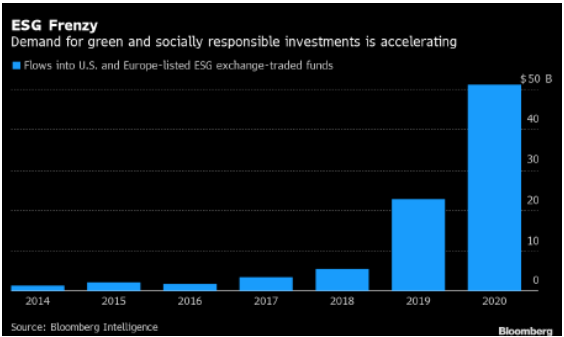
Figure 1. Demand for ESG Investments. (Source: Bloomberg)
What Does ESG Mean?
There are hundreds of environmental, social and governance factors that can be used to assess a company. These measures differ from the traditional information found in financial statements, but they can still have a meaningful financial effect on a company’s value.
That makes it important to assess the potential risks and opportunities facing each investment within an ESG framework.
This focus on financial value should not be confused with corporate social responsibility, or CSR, which is generally more focused on corporate values, conduct and public commitments.
The environmental component considers the impact a company has on the natural environment. Relevant factors may include pollution, emissions, energy and water consumption, resource use and exposure to climate change.
The social component focuses on people and relationships. This may involve workforce diversity, human rights, data protection, privacy, pay equity and labour standards.
The governance component looks at how a company is directed and held accountable. Board composition and independence, executive compensation, bribery, corruption risk and shareholder oversight are among the issues that may be considered.
Not every factor is equally important to every company. The objective is to determine which issues are financially material to the individual business.

Figure 2. Examples of ESG Factors. (Source: CFA Institute)
SG, Socially Responsible Investing and Impact Investing
Incorporating ESG factors into investment analysis is not the same as socially responsible investing or impact investing.
Socially responsible investing, often referred to as SRI, commonly uses exclusionary criteria. It may restrict the investment universe by avoiding companies or industries that do not align with a specific set of values.
Impact investing intentionally seeks to produce a positive environmental or social outcome alongside a financial return.
Both approaches tend to place greater emphasis on values.
ESG integration focuses more directly on value. It seeks to identify risks and opportunities arising from a company’s exposure to environmental, social and governance trends and its ability to manage those issues.
Integrating ESG factors does not necessarily mean excluding a company or restricting the investment universe. It provides additional information that may improve our understanding of the company and potentially contribute to stronger risk-adjusted returns.
Why ESG Research Requires Judgment
ESG analysis continues to evolve rapidly, and there is no single standardized method of reporting or scoring.
Different research providers can assign very different ratings to the same company because they use different methodologies, information and weightings. Corporate disclosure also varies widely.
At JCIC, we use multiple sources of research. These include independent providers such as Sustainalytics and Bloomberg, as well as regulatory filings, company presentations, annual reports and sustainability reports.
Some ESG factors can be measured relatively easily. Others are highly subjective.
A company may disclose the number of independent directors on its board, for example, but understanding whether that board provides effective oversight still requires judgment.
Our investment team must therefore assess both quantitative and qualitative information and form its own opinion about the ESG risks and opportunities facing each company.
Outside ratings are useful inputs. They do not replace our own analysis.
How JCIC Incorporates ESG Into Investment Decisions
JCIC incorporates ESG through both bottom-up company analysis and portfolio construction.
Our fundamental research already considers traditional investment factors such as valuation, free-cash-flow generation, balance-sheet strength, return on equity, earnings growth, earnings visibility, management’s track record, shareholder remuneration, industry conditions and competitive positioning.
ESG considerations are now incorporated into that broader assessment of company value, opportunity and potential risk.
We consider whether an environmental, social or governance issue could affect earnings, increase costs, weaken a competitive position or change the investment thesis. We also look for situations where ESG-related trends may create an opportunity that the market has not fully recognized.
A strong ESG score does not automatically make a company an attractive investment. The company must still meet our standards for business quality, financial strength, valuation and future potential.
Similarly, an imperfect score does not automatically exclude a company. The more important question may be whether management has a credible plan to address the risk and whether the company’s position is improving.
After evaluating the individual holdings, we also consider ESG exposure across the portfolio as a whole.
For example, the JCIC Balanced Fund has a weighted-average Sustainalytics ESG risk score of 21.9, placing it in the medium-risk category on a scale of 1 to 100. Under this system, a lower score represents lower unmanaged ESG risk.
The fund’s score places it in the 28th percentile of the Sustainalytics investment universe of more than 7,000 global stocks. The wider universe has an average score of 25.9, also classified as medium risk.
This portfolio-level view provides useful context, but the average score does not replace the detailed analysis of the individual companies held within the portfolio.
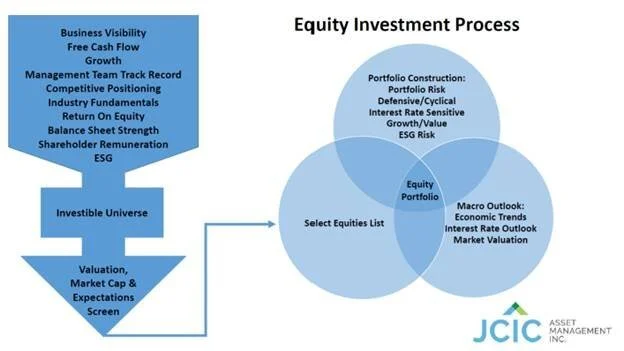
Figure 3. ESG within the investment process. (Source: JCIC Asset Management Inc.)
Enel: Identifying ESG Risk and Opportunity
Italian utility Enel is a good example of an equity holding where we see both an ESG risk and a potential opportunity.
Enel is one of Europe’s largest power utilities, with significant operations across Europe and South America.
Sustainalytics assigns Enel an ESG risk score of 23.4, placing it in the medium-risk category. That score ranks the company in approximately the 33rd percentile globally and the 12th percentile within the utilities industry group.
Enel receives strong scores for corporate governance and ESG disclosure and is considered low risk in those areas. Strong governance is attractive in any investment because it can provide greater confidence in management oversight, capital allocation and the company’s ability to execute its strategy.
The company’s environmental profile is more complicated.
Enel is the world’s largest producer of renewable energy when wind, solar and hydroelectric power are considered together. We believe the global trend toward decarbonization is here to stay, and Enel is positioned to benefit from the demand for renewable power generation.
Growth in renewable-energy capacity is expected to support net-income growth of approximately 8% to 10% annually over the next three years. The company is also targeting annual dividend growth of at least 7% over the same period. Its current dividend yield is approximately 4.2%.
Despite its substantial renewable operations, Enel continues to receive a medium environmental-risk classification because it remains exposed to traditional power generation, including coal. Approximately 54% of its electricity generation currently comes from renewable sources.
The company plans to phase out its coal-fired capacity completely by 2027.
We believe Enel’s ESG risk profile can improve over time as the company makes progress on decarbonization and expands its renewable-energy operations.
This is where the ESG score becomes a starting point rather than the final conclusion.
The current score identifies a meaningful environmental risk. Our analysis must then consider the company’s direction, management execution, capital-investment program, earnings visibility and valuation.
A company may carry a measurable ESG risk while also having a credible plan to reduce that risk and benefit financially from a long-term industry transition.
Can ESG Analysis Improve Long-Term Returns?
Will incorporating ESG considerations into the investment process improve long-term returns?
There is evidence that investing in companies with strong ESG ratings—or avoiding companies with very poor ratings—may help reduce certain earnings risks.
The evidence is more mixed when examining whether companies with high ESG scores consistently outperform in share-price terms. Research into the performance of socially responsible and impact-investing strategies is also inconclusive.
That is why we do not believe ESG should be used in isolation.
When combined with traditional fundamental analysis, ESG information may help us recognize risks that are not fully visible in financial statements, identify potential opportunities and develop a more complete understanding of the company.
It cannot guarantee stronger returns. It can, however, contribute to better-informed investment decisions.
ESG as Part of the JCIC Investment Process
We believe ESG will continue to become more important within the investment industry.
JCIC has taken steps to incorporate ESG risk into its analysis at both the individual-company and overall-portfolio levels.
Our approach does not begin or end with an outside score. We use independent research, company disclosures and our own judgment to determine whether environmental, social or governance issues may affect the quality, value or outlook of an investment.
Focusing on ESG trends may help identify opportunities, avoid unmanaged risks and potentially contribute to stronger long-term risk-adjusted returns.
It remains one part of a broader investment process built around company quality, valuation, financial strength and long-term potential.
For a current overview of the subject, read What Is ESG Investing?
Discover JCIC’s Investment Process
JCIC combines company research, global market analysis and disciplined portfolio construction to identify long-term risks and opportunities.

Disclosure: Although we obtain information contained in our newsletter from sources we believe to be reliable, we cannot guarantee its accuracy. The opinions expressed in the newsletter are those of JCIC Asset Management, its editors and contributors, and may change without notice. Any views or opinions expressed in the newsletter may not reflect those of the firm as a whole. The information in our newsletter may become outdated and we have no obligation to update it.
The information in our newsletter is not intended to constitute individual investment advice and is not designed to meet your personal financial situation. It is provided for information purposes only and nothing herein constitutes investment, legal, accounting or tax advice, or a recommendation to buy, sell or hold a security. No recommendation or advice is being given as to whether any investment is suitable for a particular investor or a group of investors. It should not be assumed that any investments in securities, companies, sectors or markets identified and described were or will be profitable.
We strongly advise you to discuss your investment options with your Relationship Manager prior to making any investments, including whether any investment is suitable for your specific needs.
The information provided in our newsletter is private, privileged, and confidential information, licensed for your sole individual use as a subscriber. JCIC Asset Management reserves all rights to the content of this newsletter.